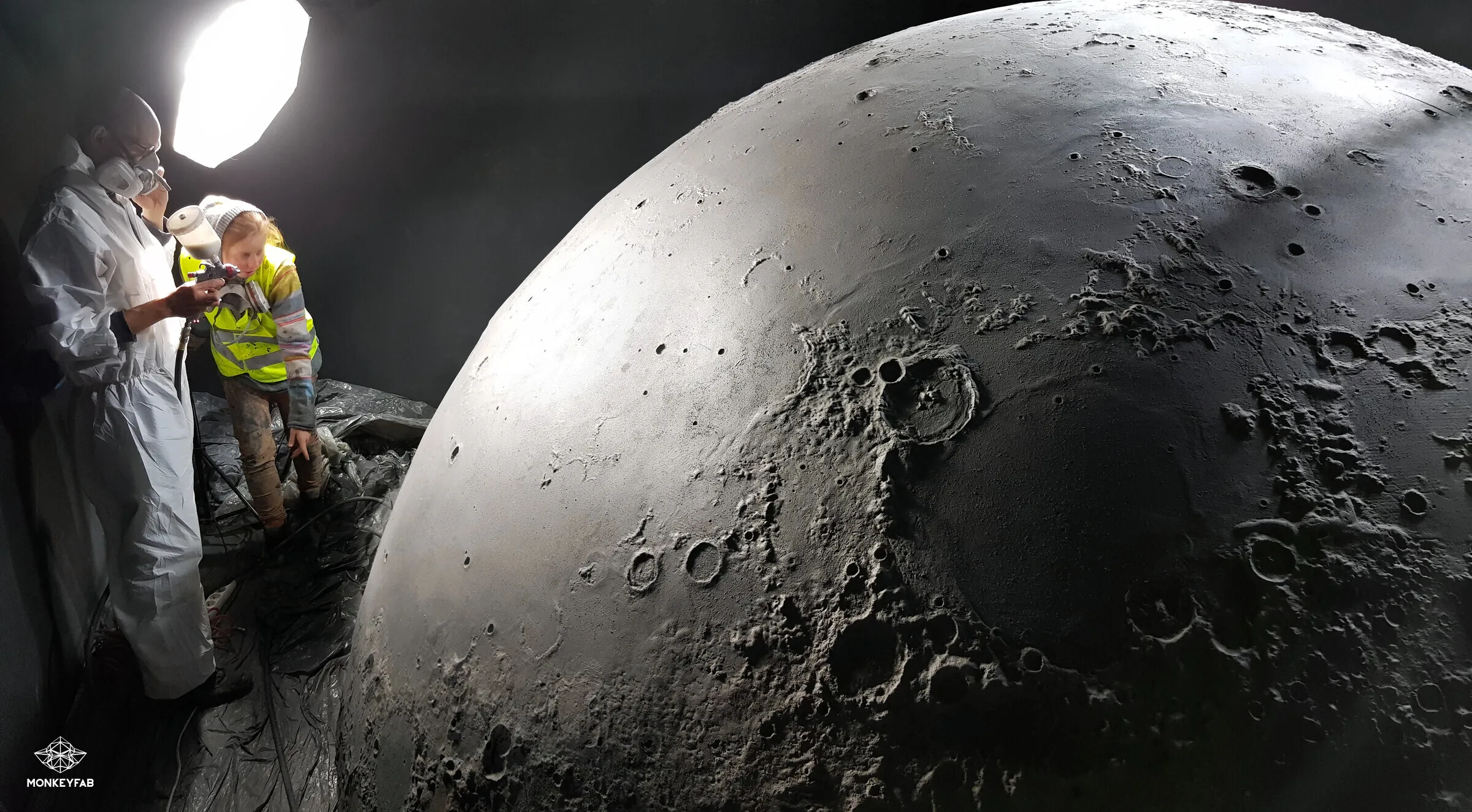
Planetarium in Białków
A giant 3D print of the Moon’s real surface prepared from topographic data.
Astronomy education at architectural scale
Key project highlights
-
Real topographic data
The model was based on 22 GB of lunar surface data captured at 56 meters per pixel by the Lunar Orbiter Laser Altimeter.
-
A 4.5-meter dome
Using that data, we prepared a hemisphere matched to the geometry of the composite planetarium dome so the object would work both inside and out.
-
116 printed parts
The model was divided into sections sized for the large-format printers available at the time, which made production and installation manageable.
-
Intimate projection space
Inside, the dome forms a compact planetarium where nothing distracts from the show and the neutral surface supports crisp projection.
-
An exterior that teaches as well as impresses
After the screening, visitors can study a faithful physical interpretation of the Moon’s topography, reinforcing the educational value of the installation.
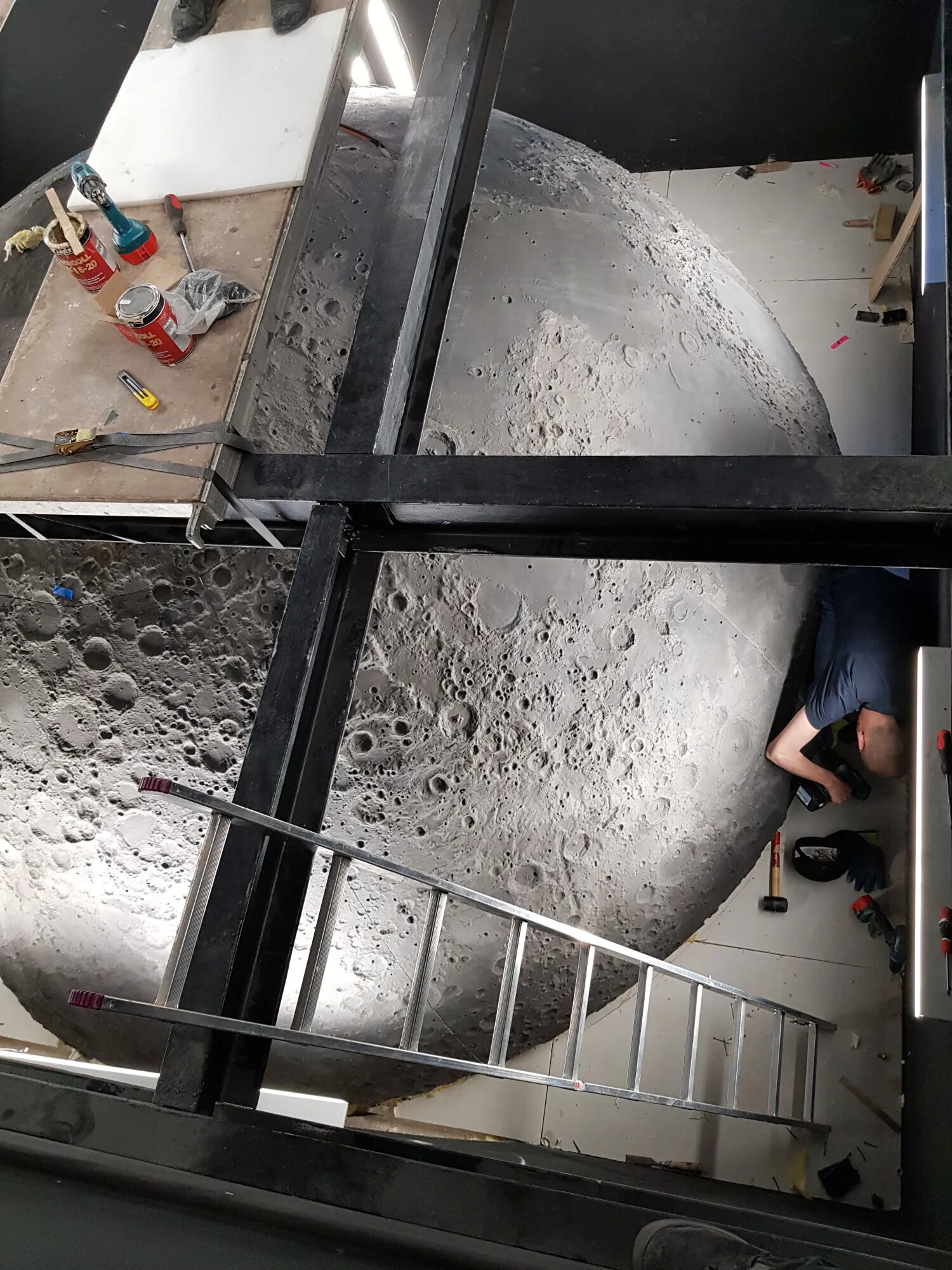
Large-scale 3D printing
The model was divided into 116 parts sized to match the capabilities of the large-format printers available at the time.
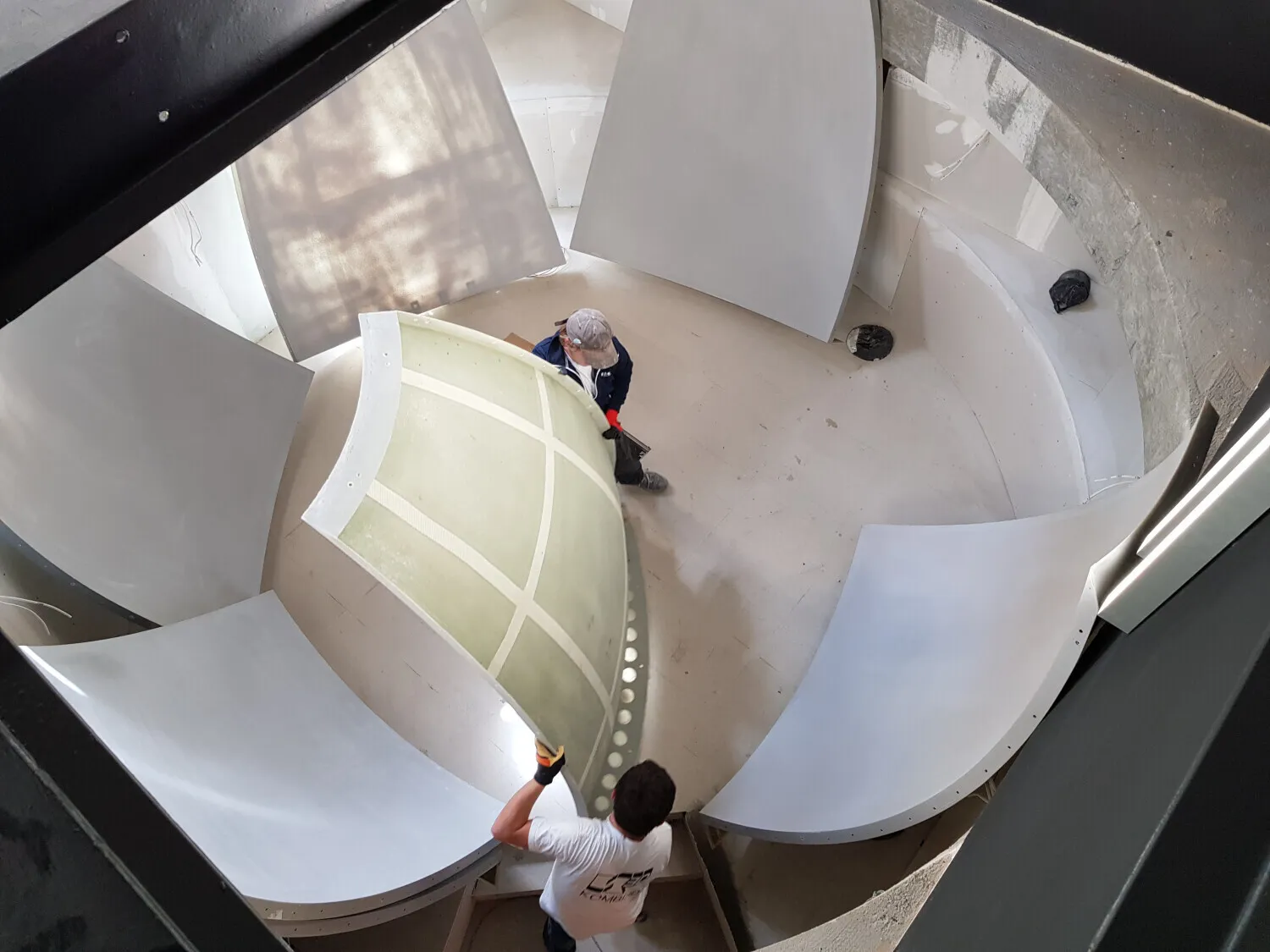
Piece by piece
Because the installation space was limited, the dome had to be assembled directly on site.
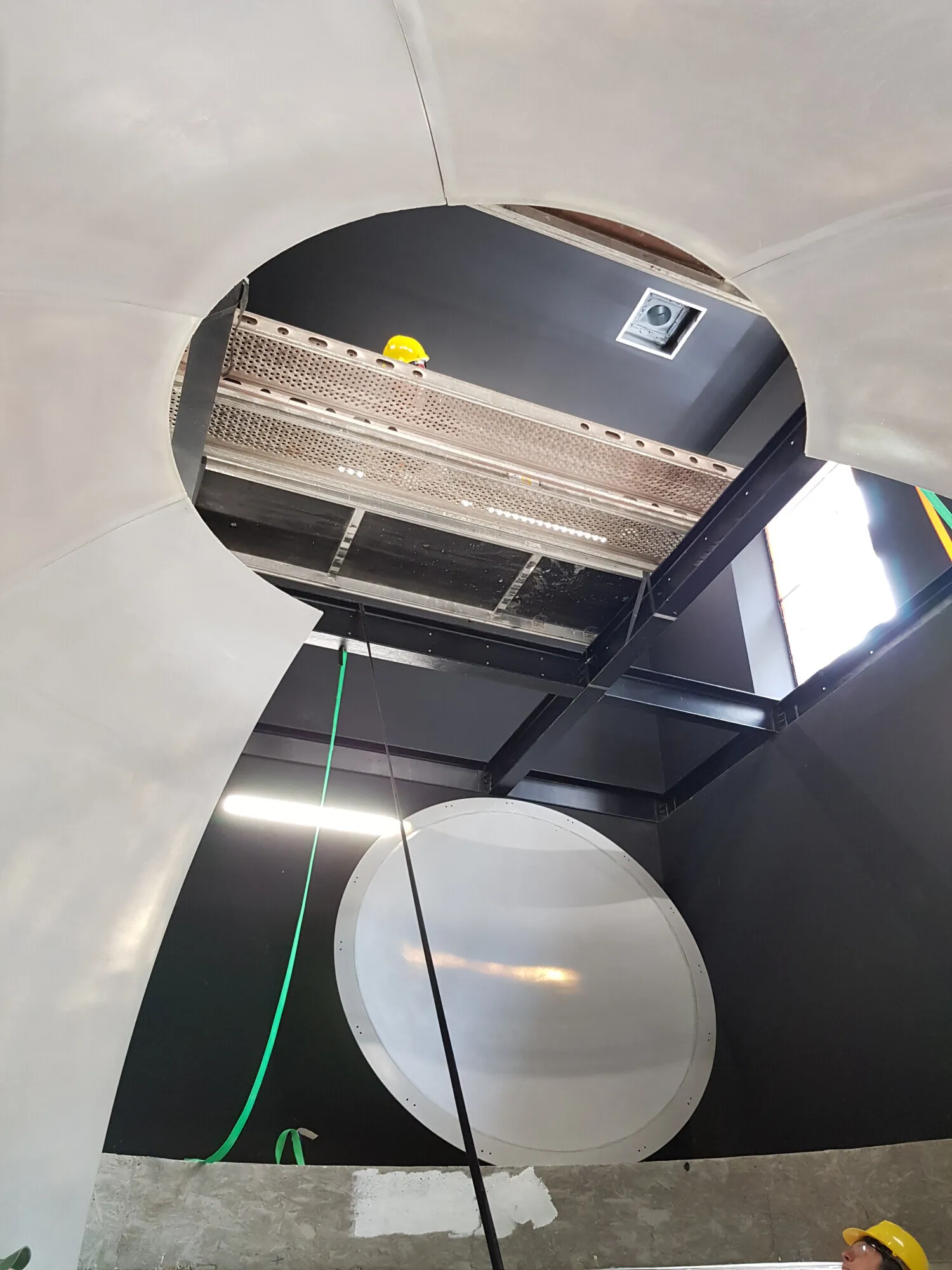
A moment of truth
Trial assembly allowed the team to verify the fit of all elements in the final geometry of the dome.
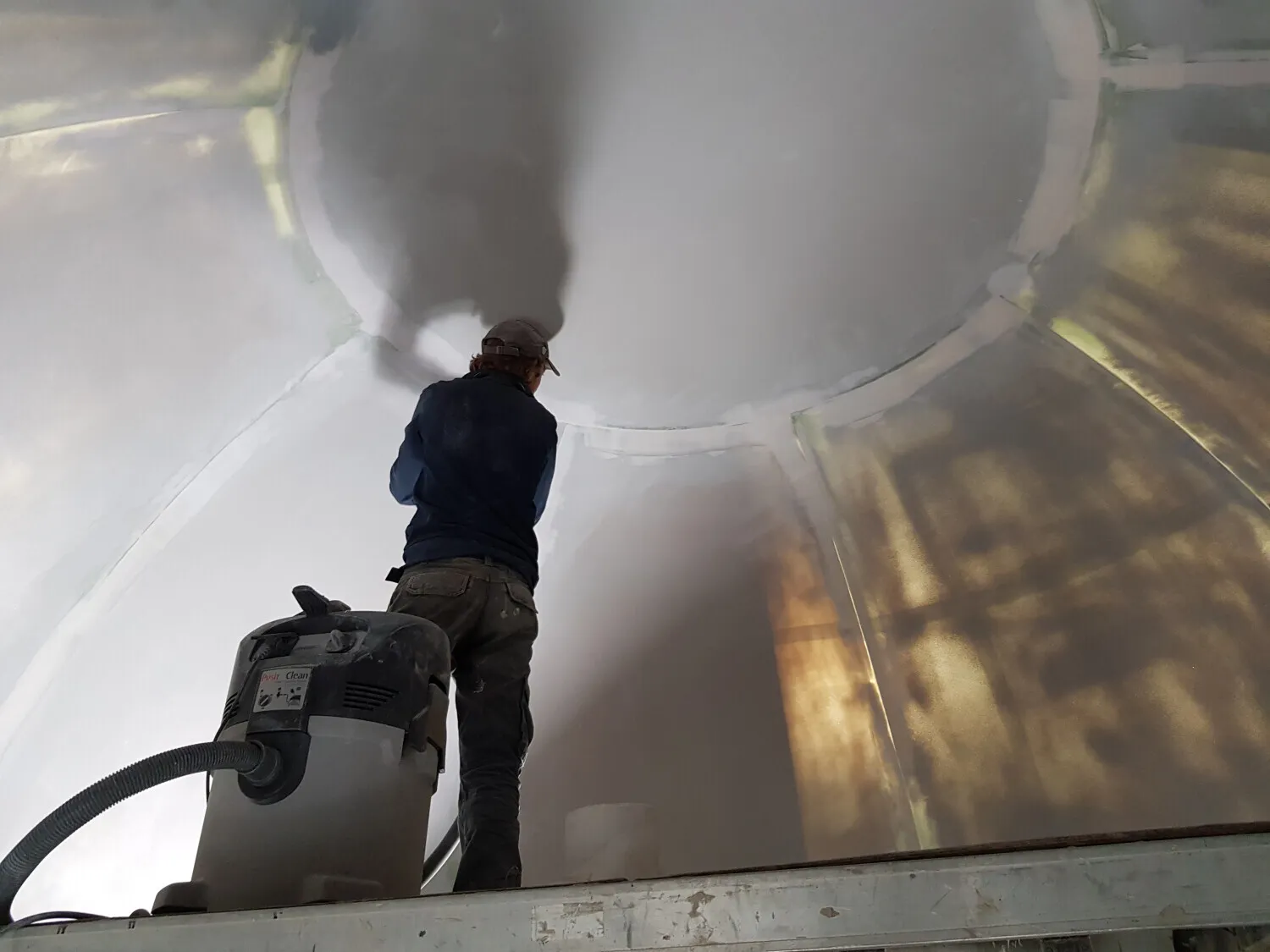
Mind the gap
Every element required precise placement and manual refinement along the seams.
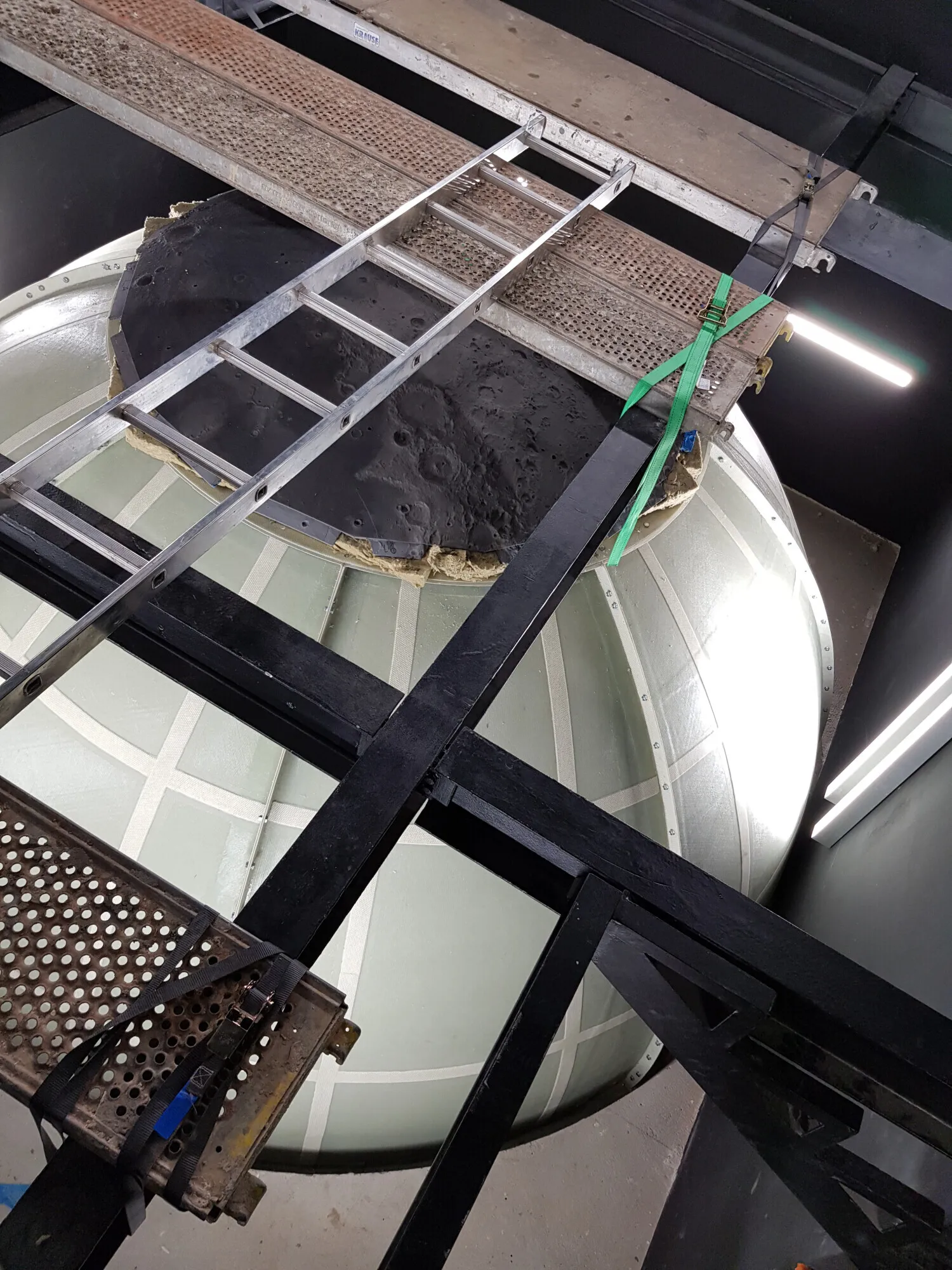
A lunar helmet
Work on the outside of the dome also had to remain faithful to the underlying topographic model.
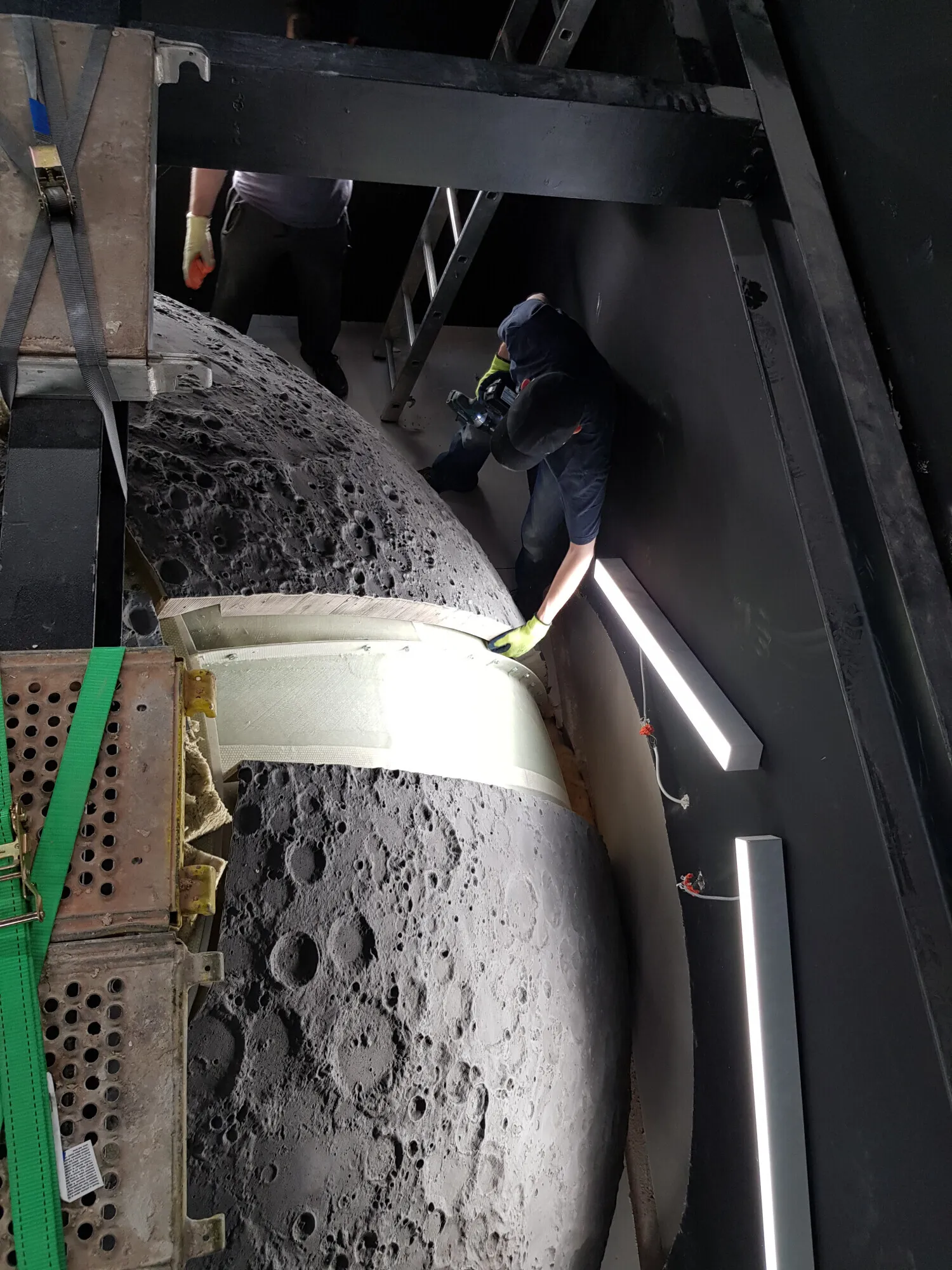
Skimming the surface
The final stage focused on cosmetic finishing and preparing the object for handover.
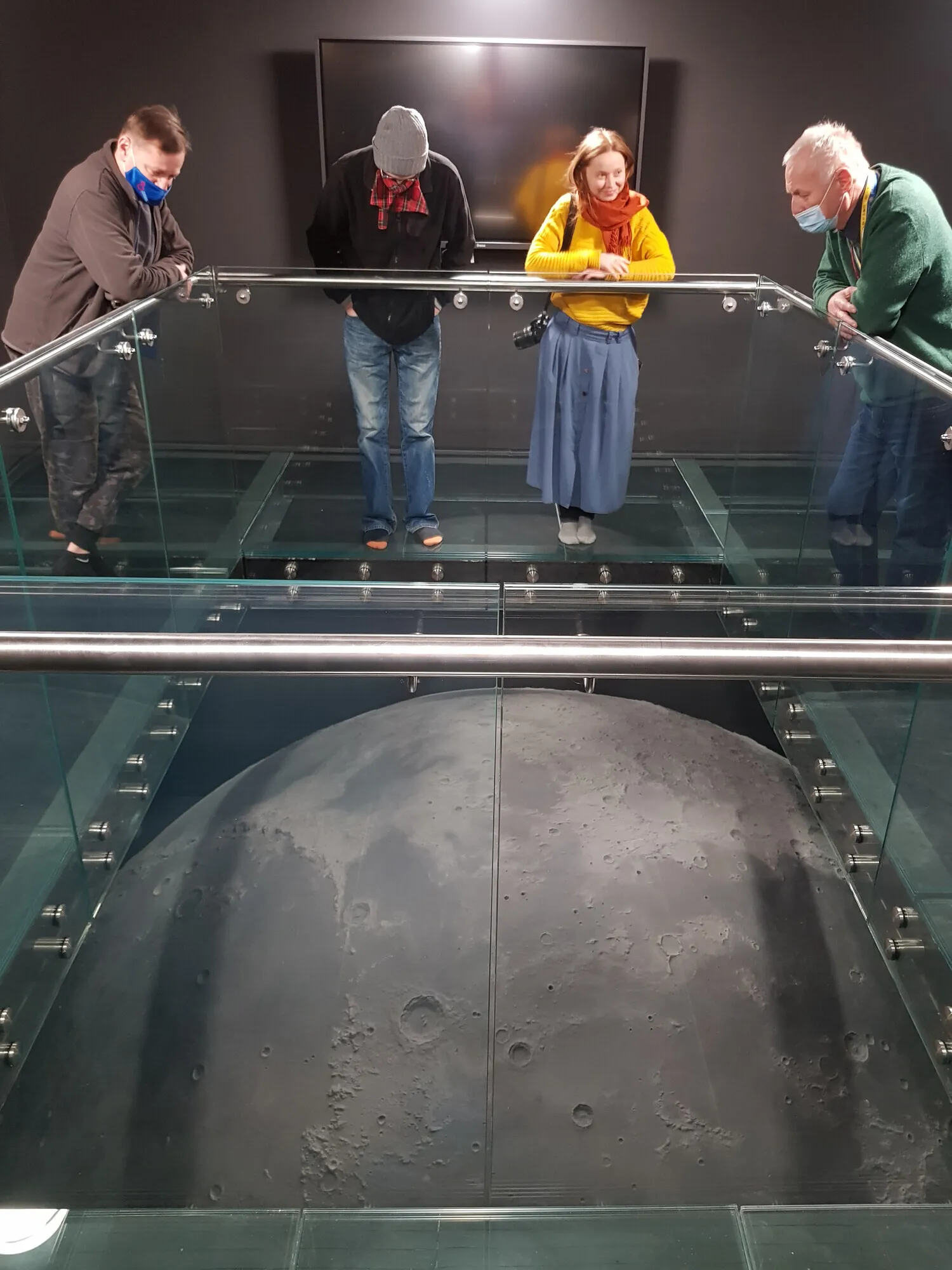
Ground control to Major Tom
A final look before the new space began hosting shows and educational sessions.
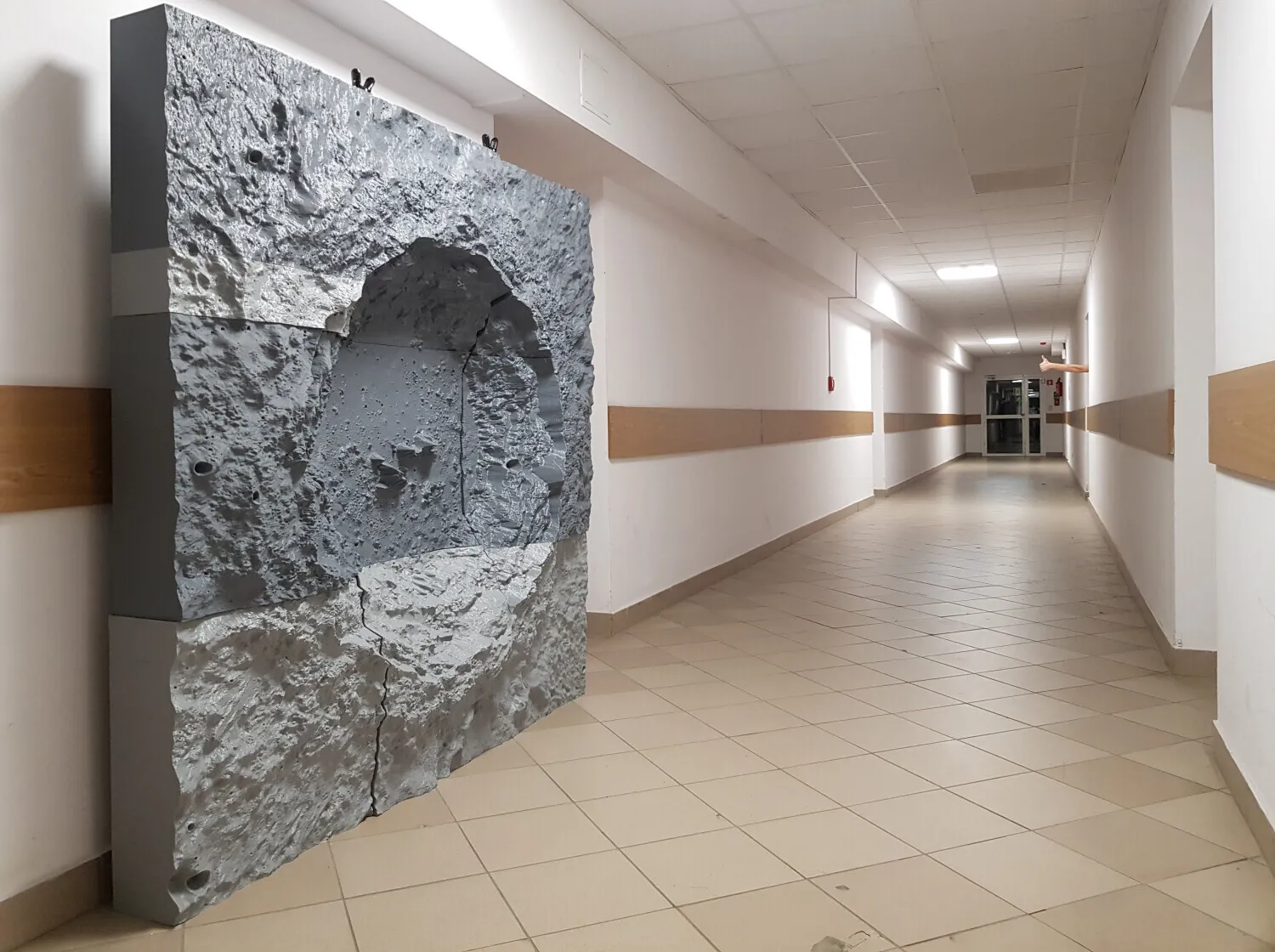
Copernicus rising
The planetarium project became the starting point for further pieces inspired by the topography of the Moon.
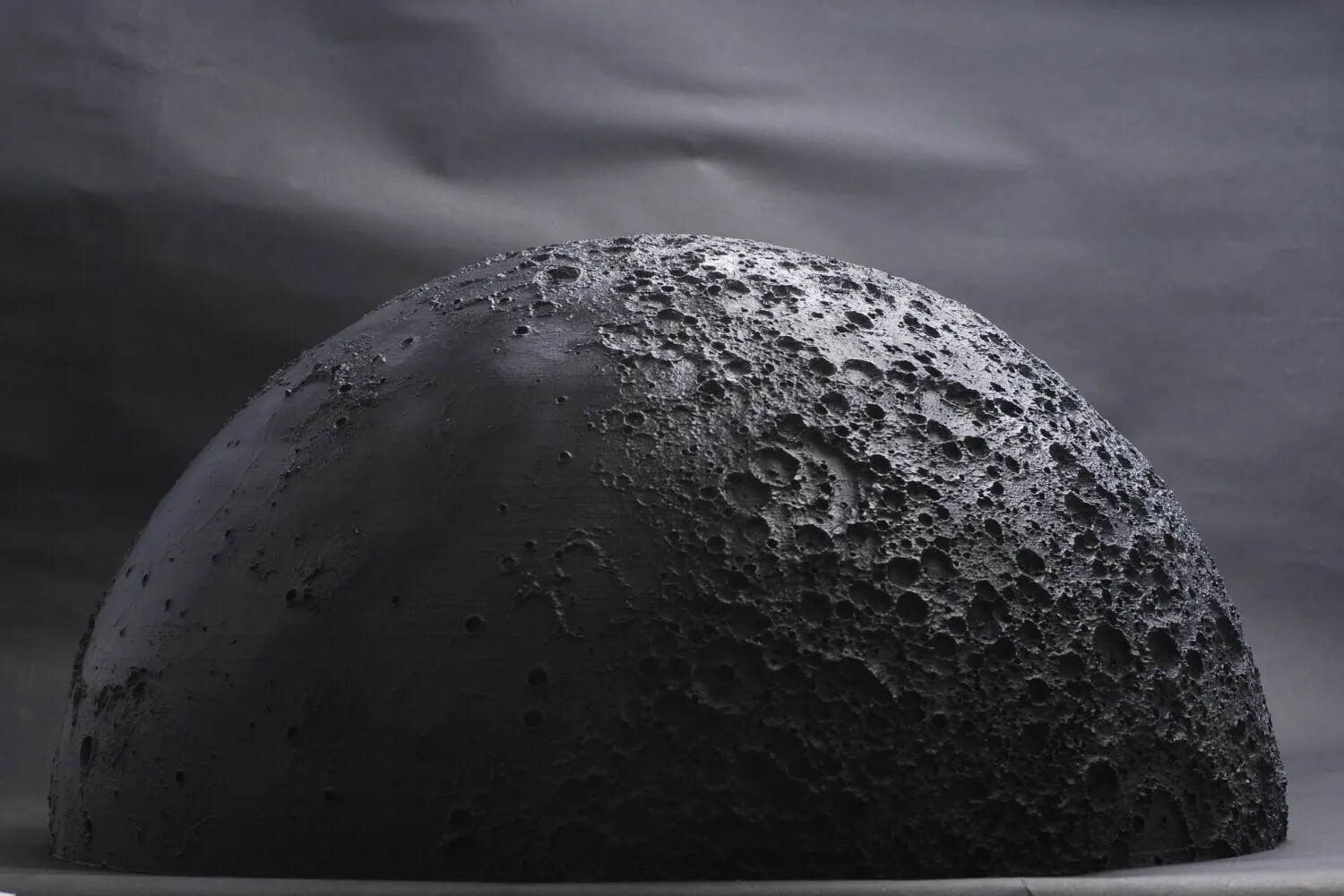
To become a lamp
The know-how developed for the dome also led to more universal objects, including lamps and moonwall panels.